Coast and sea defences
The sea is why people came here, and the coastline needs looking after to stay that way. Groynes, a sea wall and rock armour hold the shingle in place along this stretch, and they need regular maintenance to keep doing their job.
Responsibility for coastal protection sits with Arun District Council and the Environment Agency, not with us. The Association keeps a close watch and makes itself useful, and the relationship with both is a good one.
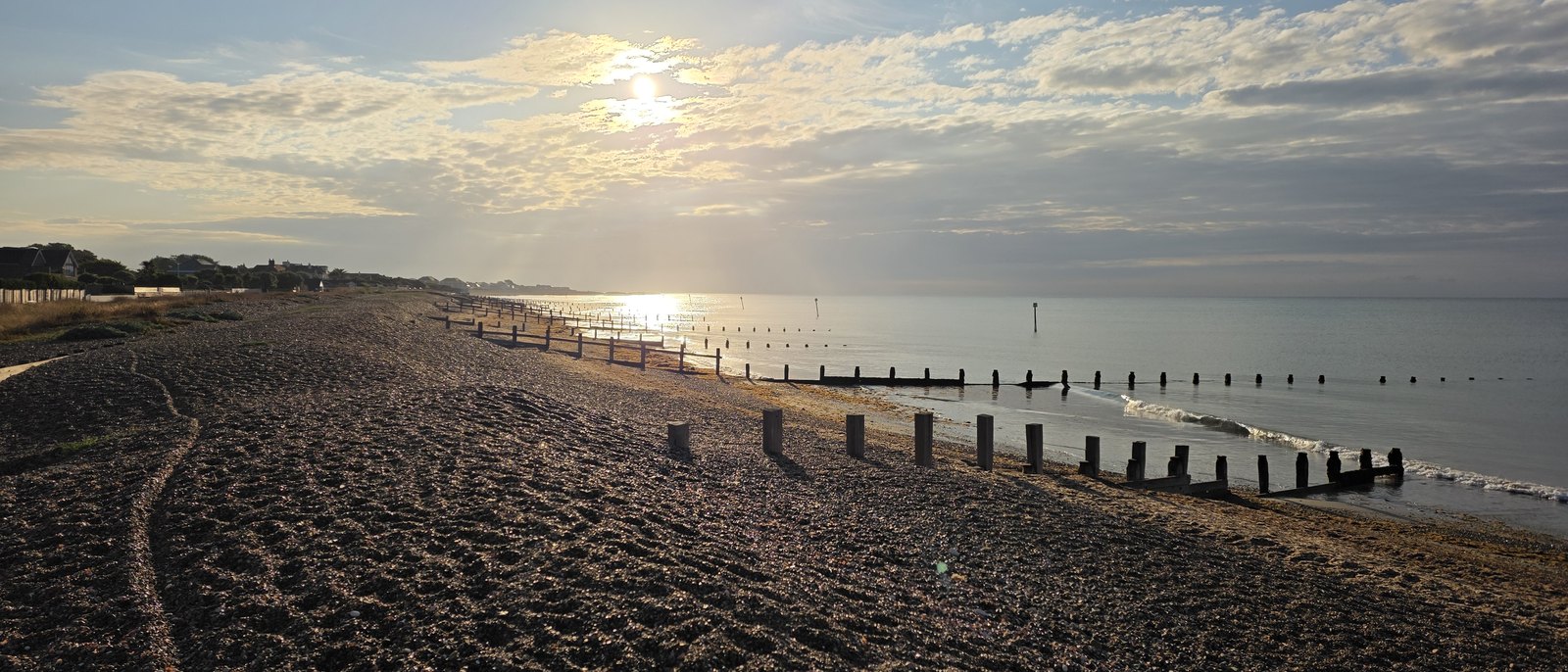
The Coastal Sub-Committee
Formed in 2000 to monitor erosion and to keep the authorities in conversation about the sea defences. It has three jobs:
- Represent members, particularly those living on or immediately behind the sea front.
- Protect the safety and enjoyment of everyone using the Greensward and the County Council footpath running west from Sea Lane.
- Preserve the Greensward itself, which is a Site of Nature Conservation Importance.
We work closely with the relevant authorities rather than at arm’s length from them, and the relationship is a good one. It has taken years to build and it is worth protecting.
The marker posts
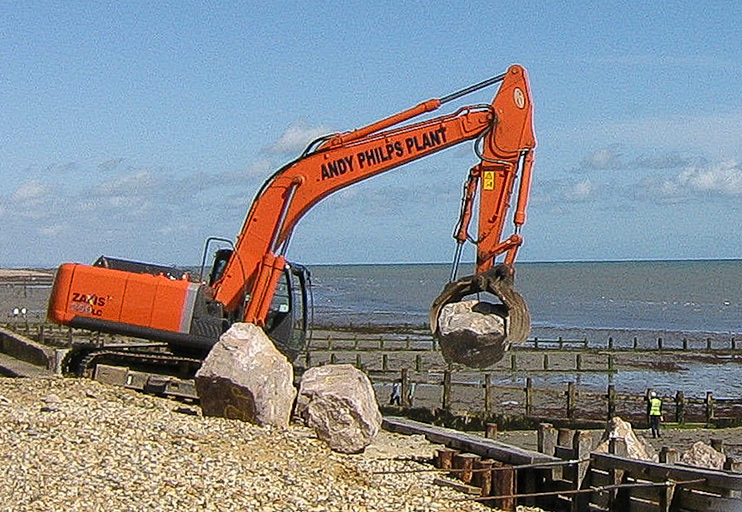
At the seaward end of the groynes there are slim posts carrying a shape on top. The post is a marker post and the shape is its topmark, which is the term for anything fixed to the head of a post or buoy to make it recognisable from a distance.
They are there for one reason, and it is worth knowing if you swim, paddle or take a boat out here.
At low water a groyne is obvious. It is a line of timber posts running down the beach and you would have to work hard to hit one. At high water it disappears completely, and a swimmer, a paddleboarder or a small boat can be directly over a solid structure without any sign of it. The marker posts stay above the water when the groyne does not, and show where it ends.
So if you are in the water, treat a marker post as the end of something hard rather than as decoration.
What has been done
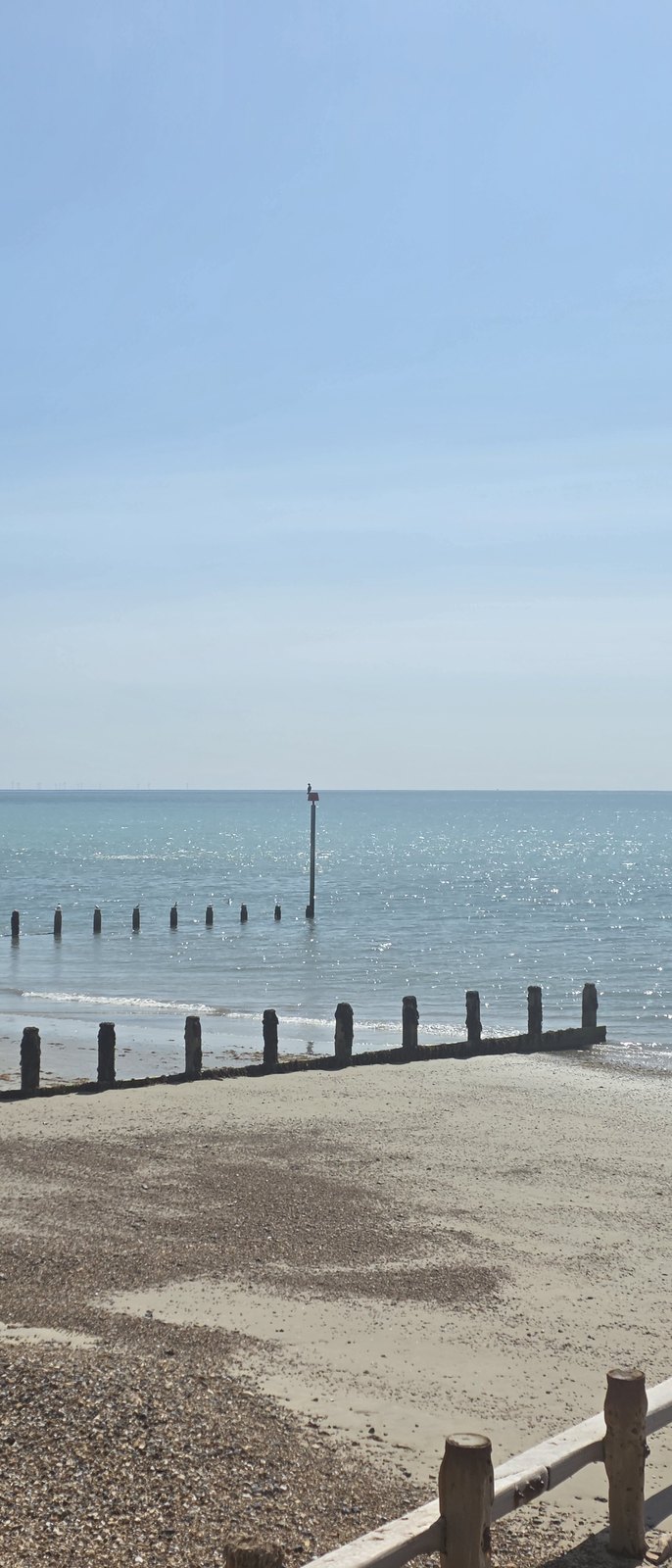
Arun District Council has carried out the following work on our defences and foreshore. We are grateful for it, and for being kept informed throughout.
| Year | Work |
|---|---|
| 2019 | Groyne 155 by Old Point had been heavily loaded and the driven members separated from the structure. Emergency underpinning carried out. |
| 2018 | Enhanced repair phase: 12m³ of tropical hardwood installed to replace failing softwood. Ad-hoc sea wall repairs including the fatiguing expansion joints. |
| 2017 | General repair and maintenance, including geotextile shingle containers, used in place of gabion baskets because gabions leave sharp debris when they fail. |
| 2016 | Repairs to the timber groyne field by Sea Way, and to part of the Old Point sea wall cover slab. |
| 2015 | After successive storms the metal piles retaining the head of groyne 155 broke free. Piles re-seated and the groyne rebuilt. |
| 2014 | Extensive softwood repairs to groynes and breastwork. The wall retaining the Old Point access steps failed and was recast in situ. Patch plates welded to the sheet pile toe to reduce undermining of the sea wall. |