Living well together
Most of what follows is common sense, and most people here already do it. We have written down the reasons rather than just the rules, because the reasons are usually the persuasive part.
Speed
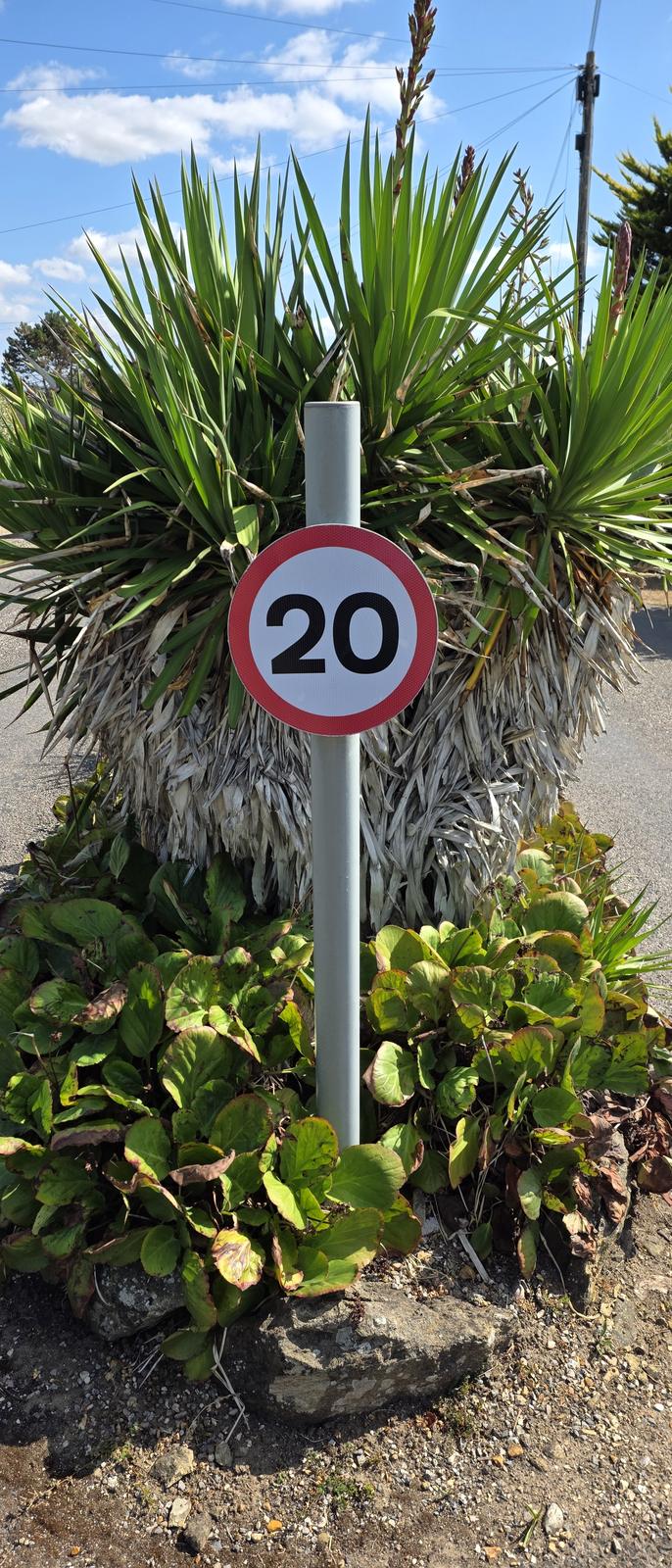
The limit on the estate roads is 20 miles an hour, and we would ask everyone to hold to it, including visitors and contractors.
These are narrow roads with no pavements. People walk in them, children and adults cycle in them, and older residents cross them slowly. Twenty is not an arbitrary number. It also happens to be gentler on the road surface, which we all pay to repair.
Parking
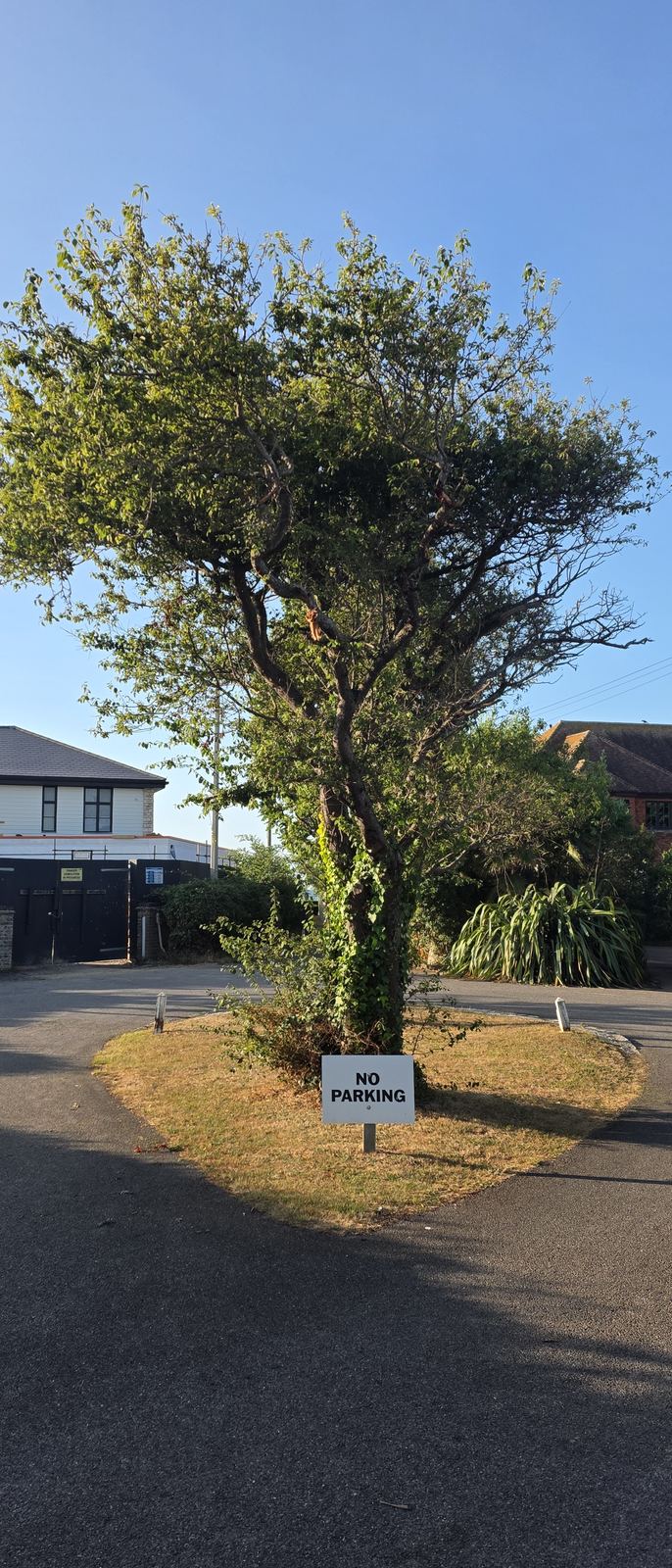
Every private road on the estate has a sign at its entrance saying “no parking”. They are the Association’s own signs, and they mean it.
The reason is width. These roads were laid out in the 1920s for far smaller cars, there are no pavements, and people walk in them because there is nowhere else to walk. A single car left on the carriageway can stop a fire engine, an ambulance or a bin lorry getting past. Not inconvenience them. Stop them.
So the working rule is simple:
Park on your own property. Treat the road as somewhere you stop, not somewhere you leave a car.
That covers visitors too. If people are coming, find space for them on your own drive, and if you are expecting more cars than you can fit, a word with a neighbour beforehand almost always sorts it out. Most people here have room and are glad to be asked.
Not on the verges, at any time. The constitution is explicit about this: “Vehicles should not be parked on the verges.” They are soft, they rut, and the repair comes out of your own road fund. The verge is also what drains the water off the road, so a rutted one costs twice.
When it cannot be helped
Nobody is pretending this is always possible. Deliveries happen, builders arrive, families visit, and some properties genuinely have less room than others.
When a car does have to go on the road, the exception should look like an exception:
- Not overnight, if there is any way round it.
- Never on a bend, a junction or a roundabout, and never opposite another parked car. Two cars facing each other across one of these roads is a closed road.
- Never on a verge, however briefly.
- Wheels straight and tight in, so a wide vehicle can still pass.
- On bin morning, off the road entirely. See bins and recycling.
If you are having building work done, on-road parking for contractors’ vehicles has to be agreed with us in advance. That is a condition of the building works charge, not a courtesy.
Dogs
Keep your dog on a lead on the estate roads and twittens, and clean up after it. Both are asked for on signs at the entrance to every private road.
The lead is really about the roads rather than the dogs. There are no pavements here, cars come round hedges, and a dog stepping off a verge at the wrong moment is a bad afternoon for everybody.
For the other, there are three bins on the Greensward and one at the top of Sea Lane. Dog wardens do operate in the area, and not clearing up risks a fine, but that is not really the point. Somebody’s children play on that grass.
Verges
The verges belong to MOSA, but we ask residents to look after the stretch outside their own property: cutting and trimming as needed, and keeping hedges and bushes from spreading over the edge.
Two reasons. It keeps the maintenance bill down for everybody, and the grass edge is what drains surface water off the road. Cut the verge back from the carriageway and the water has nowhere to go.
If a vehicle or pedestrian access crosses the verge to reach your property, maintaining that crossing is the property owner’s job.
Hedges and trees
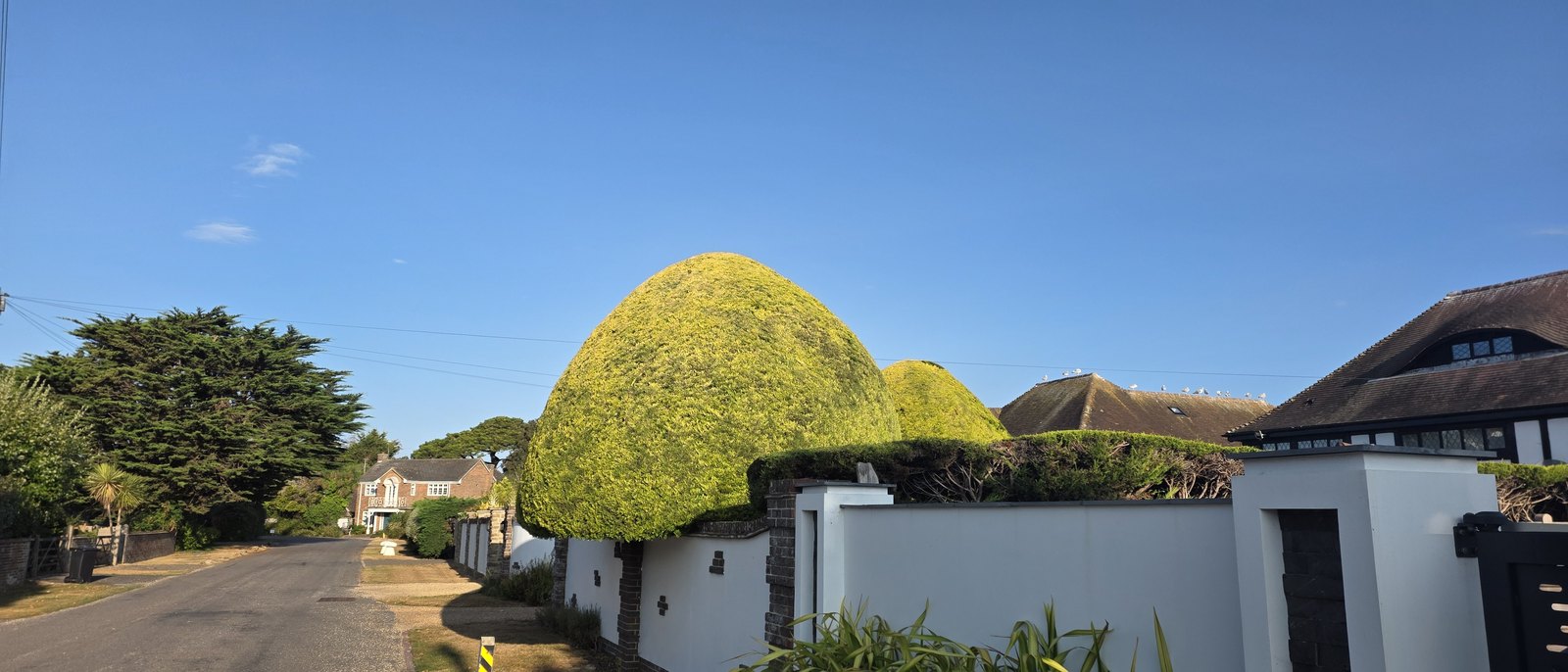
Please keep hedges and trees from overhanging your neighbours’ gardens or the twittens, and keep the height sensible. Light and outlook matter to the person next door as much as they do to you.
Skips and deliveries
If a skip has to stand in the road overnight, please make sure it is lit. If anything gets damaged while it is there, the person who hired it is responsible for putting it right.
Drones
In 2025 a drone came down in a garden on the estate, narrowly missing the people in it. That is why there is a policy, and it is why the policy is firmer than you might expect.
Do not fly a drone over the estate or the Greensward. The one exception is the airspace directly above your own property.
If you have a real need, such as marketing a house or surveying a roof, MOSA can grant an exception in writing. You would need to show the operator is properly certificated, the flight has to comply with Civil Aviation Authority rules, and the operator carries liability for anything that goes wrong. Ask through your Road Representative or the Secretary before anything is booked.
This applies to anyone flying here, not only residents. If you are engaging an estate agent or a surveyor, please tell them, because they will usually assume they can.
MOSA Drone Policy May 2025 · PDF, 175 KB (opens in a new tab)Fly tipping
Dumping rubbish on land that is not yours is a criminal offence. Here that means the beach, the Greensward and the village green, all of which are somebody’s job to clear.
Garden waste counts, and it is the easiest one to do without really thinking about it. Clippings and prunings tipped onto a verge or the edge of the Greensward smother whatever is growing underneath, and the Greensward is a Site of Nature Conservation Importance. There is a garden waste collection for exactly this.
Bonfires and fireworks
A great many roofs on this estate are thatch.
A stray spark is a genuine risk to a neighbour’s home, not a theoretical one, and fireworks frighten the local dogs and cats. Please do not light either.
If you are planning fireworks for a special occasion, there are legal restrictions on timing as well, and it is worth checking those first.
Noise
Please make sure that you, your visitors and your contractors are not causing a nuisance to the people around you. Loud music and persistent barking carry a long way on an estate this open.
A quiet Sunday morning
This one is a request rather than a rule, and it came from a resident.
Houses here sit close together, gardens back onto gardens, and a mower or a strimmer two doors away is the whole of somebody’s Sunday morning. So if the grass can wait until the afternoon, please let it wait. The same goes for hedge trimmers, chainsaws, power tools and drilling.
Nobody is going to knock on your door about it. But it is a small kindness that costs you a couple of hours and gives everybody around you a lie-in, and it is the sort of thing that makes a place pleasant to live in.
Working from home
Covenants on most properties here prevent using a house for commercial purposes, and the Association is not in the business of policing laptops. Working from home is not what that covenant is aimed at.
What we would take an interest in is a business that creates a genuine nuisance for neighbours: traffic, deliveries, noise, or customers coming and going.
Signs
Trade boards and estate agents’ boards are not permitted on the estate, apart from construction safety and security notices, and a single trade board where one is genuinely needed to find the place.
Building work
If you are planning building work, please see building work and planning. Heavy vehicles do real damage to the roads and drains, and there is a charge that reflects it.
The same thing on paper
Everything on this page is drawn from the Association’s Residents’ Responsibilities, which is where the wording was settled. It is here in full for anyone who would rather read it that way, or print it and keep it in a drawer.
Where the two differ, this page is the newer one. It is also the one that explains why.
Residents’ Responsibilities September 2021 · PDF, 201 KB (opens in a new tab)